What a Hardstuck Marvel Rivals Player Looks Like in 2026 When a GM Spectates
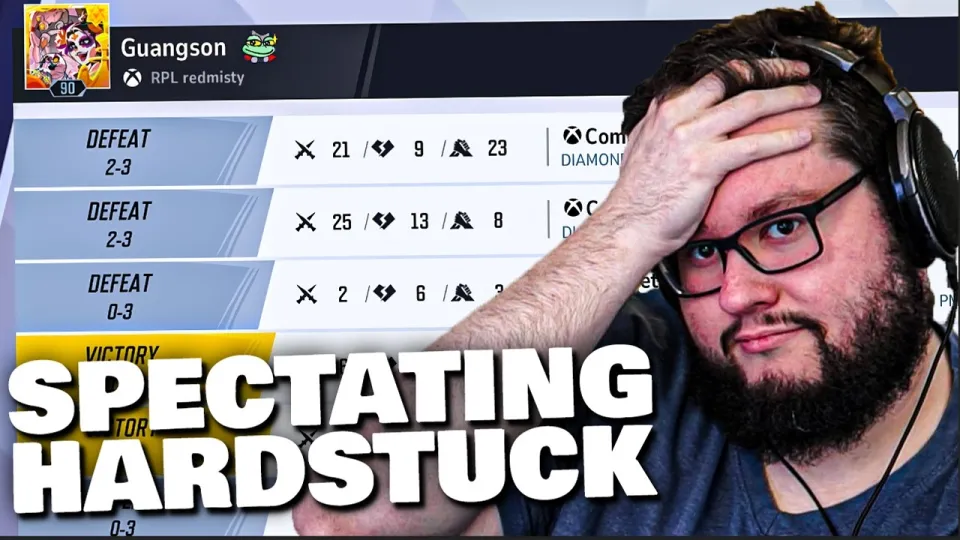
Video: I Spectated Someone Who Claimed To Be Hardstuck In Marvel Rivals
You can order the same kind of articles for your own video to boost it on YouTube and Google. Just message the Telegram bot @sat_sit_bot. The bot writes and publishes the articles itself (with your YouTube video embedded) on popular topical websites (no ads). Free trial — 50 articles.
· based on the channel Flats
Key takeaways
- Flats spectated a Marvel Rivals player who insisted his rank was held back by teammates, not his own play.
- The player was in Grandmaster and described himself as hardstuck despite a negative win rate.
- He played Cloak & Dagger as a Dagger one-trick, leaning on Cloak's invisibility as an escape instead of a tool.
- The review highlighted a Rocket Raccoon player skipping damage, walking past a health pack and wasting ultimates.
- Viewers pointed out that the same profile keeps appearing on teams one game away from a rank-up.
A "hardstuck" Marvel Rivals player is someone who believes their rank is decided by teammates rather than their own decisions, and the case Flats reviewed fits that pattern exactly: a Grandmaster-level player with a negative win rate who blamed matchmaking while his own cooldown usage, positioning and ultimate timing told a different story. You can watch Flats live and judge similar replays yourself on his Twitch channel. The lesson is simple — in Marvel Rivals, rank and ego are not the same thing, and a single spectated match can expose the gap between them.
What the Marvel Rivals hardstuck spectate actually showed
Flats built the entire segment around one claim: the player was stuck because of his teams. The review broke that claim down into observable habits rather than opinions.
- A negative win rate at Grandmaster. Climbing with more losses than wins is possible in Marvel Rivals thanks to rank protection and performance-based point gains, but it means the rank was not earned through consistent play.
- A one-trick pocket. The player ran Cloak & Dagger almost exclusively, and the running joke from the audience was that he was "playing Dagger, holding the Cloak" — treating the character as a single heal button with an escape attached.
- Blame as a default. Every death had an external cause: a teammate out of position, a tank not peeling, a duelist feeding. None of it was framed as his own decision.
- No accountability loop. There was no moment where the player reviewed what he could have done differently, which is the actual definition of being hardstuck.
The spectate format matters here. Flats does not argue theory; he watches the camera, pauses on cooldowns and lets the viewer see the gap between what the player says and what the player does.
Why Grandmaster in Marvel Rivals does not mean what players think
A Grandmaster badge in Marvel Rivals signals time invested as much as skill, and the reviewed match made that visible. Ranked ladders in hero shooters inflate over a season: performance points, win-streak bonuses and loss mitigation all push players upward, so a negative win rate can still produce a climb. The practical consequence is that a Grandmaster lobby can contain players who do not understand basic resource management — health packs, ultimate economy, off-angle safety — while a Platinum lobby can contain players who do.
The player's own framing gave the game away. Calling yourself hardstuck implies you have already decided the ceiling is external. In a game where every role has carry potential — a support who lands key Cloak dark-force blinds, a tank who holds space, a duelist who trades efficiently — the only constant across dozens of losses is you.
Cloak & Dagger one-trick habits that keep players stuck
Cloak & Dagger is one of the most forgiving supports in Marvel Rivals, which is exactly why bad habits hide inside it. The reviewed player used the kit in the least demanding way possible.
- Dagger as a heal turret. Dagger's primary fire and the healing dome do the work passively, so the player never learned to pre-place heals or read incoming burst damage.
- Cloak as a panic button. Cloak's invisibility was burned the moment pressure arrived, rather than used to dodge a specific ultimate or reposition for a dark-force blind. The invisibility is a timing tool, not a get-out-of-jail card.
- Ultimate without a plan. Dagger's ultimate wants a committed push or a saved fight; dropping it reactively wastes the strongest support tool in the kit.
- No swap pressure. A one-trick who never considers a second pick removes their own ability to answer a bad matchup, then blames the team for the result.
If you play Cloak & Dagger, the fastest fix is to log every death and label it: positioning, cooldown misuse, or genuinely unavoidable. Most players find the third category is far smaller than they assumed.
The Rocket Raccoon problem and the damage myth
One of the most repeated arguments in Marvel Rivals is that Rocket Raccoon should focus on damage because his gun shreds. The reviewed match showed the opposite failure mode: a Rocket who contributed almost nothing on either axis, drifting around the map, walking past a health pack while apparently looking for one, and burning his ultimate into lost fights.
Rocket's value comes from three things: consistent chip healing through his orbs, resurrection beacons placed before a fight rather than during it, and a team-up that turns a duelist into a monster. Damage is a bonus for finishing targets, not a job description. The "no damage Rocket" debate has done real harm because it pushes players into a hybrid style where they do neither job well — the heals are late and the damage is meaningless. Pick one identity per fight and commit.
What viewers keep asking about hardstuck players in Marvel Rivals
The recurring question from the audience was not about mechanics but about matchmaking: how does a player like this end up on my team at 99 out of 100 points to the next rank? The honest answer is that the ladder does not sort by self-awareness. It sorts by points. A player who grinds enough games, plays a forgiving support and never tilts off the game entirely will drift upward regardless of decision quality.
The second recurring theme was ego. A player with a strong opinion about teammates but no review habit is a predictable teammate: he will blame the tank, blame the duelists, blame the lobby, and change nothing. The counter is boring and effective — record your own games, count your wasted cooldowns, and stop treating a rank badge as evidence of anything except hours played.
Where to watch the full Marvel Rivals breakdown and follow Flats
Flats streams Marvel Rivals and Overwatch spectates, coaching segments and ranked climbs, and the channels below are where the full reviews and community discussion live.
- Twitch, live spectates and chat: https://www.twitch.tv/flats
- Discord community: https://discord.gg/flats
- Twitter/X updates: https://twitter.com/Flats_Ow
- TikTok clips: https://www.tiktok.com/@flats_ow
- Facebook page: https://www.facebook.com/FlatsTTV
Final thoughts on the hardstuck Marvel Rivals spectate
The reviewed match is a clean case study in why Marvel Rivals players stay stuck: a Grandmaster badge, a negative win rate and a support one-trick who treats invisibility as an apology note. Flats, the author of this breakdown, does the thing most players avoid — he watches the replay frame by frame and names the decisions instead of the teammates. The takeaway is not that the player is uniquely bad; it is that the same habits are common and fixable. If you want more of these reviews as they happen, follow Flats on Twitch and watch the next spectate live.
Source: I Spectated Someone Who Claimed To Be Hardstuck In Marvel Rivals · Markdown version
Questions & answers
Is it possible to be hardstuck in Marvel Rivals with a negative win rate?
Yes. Ranked ladders use performance points, win-streak bonuses and loss mitigation, so a player can climb while losing more games than they win. That means a high rank does not guarantee consistent decision-making, which is exactly what a spectate review exposes.
Why do Cloak & Dagger players get stuck in low impact habits?
The kit is forgiving: Dagger's healing does a lot of work passively and Cloak's invisibility offers a free escape. Players who never learn to pre-heal, time the invisibility against specific ultimates or plan Dagger's ultimate tend to plateau and then blame teammates for the results.
Should Rocket Raccoon focus on damage in Marvel Rivals?
Damage is a bonus, not the job. Rocket's core value is steady orb healing, a resurrection beacon placed before the fight and team-up synergy. Chasing damage usually means heals arrive late and the damage itself is meaningless, which is the worst of both roles.
What is the fastest way to stop being hardstuck?
Record your own matches and label every death as positioning, cooldown misuse or genuinely unavoidable. Most players discover the third category is small. Add one backup pick per role and stop treating your rank badge as proof of skill.