Rust Solo Survival With 14,782 Hours of Experience
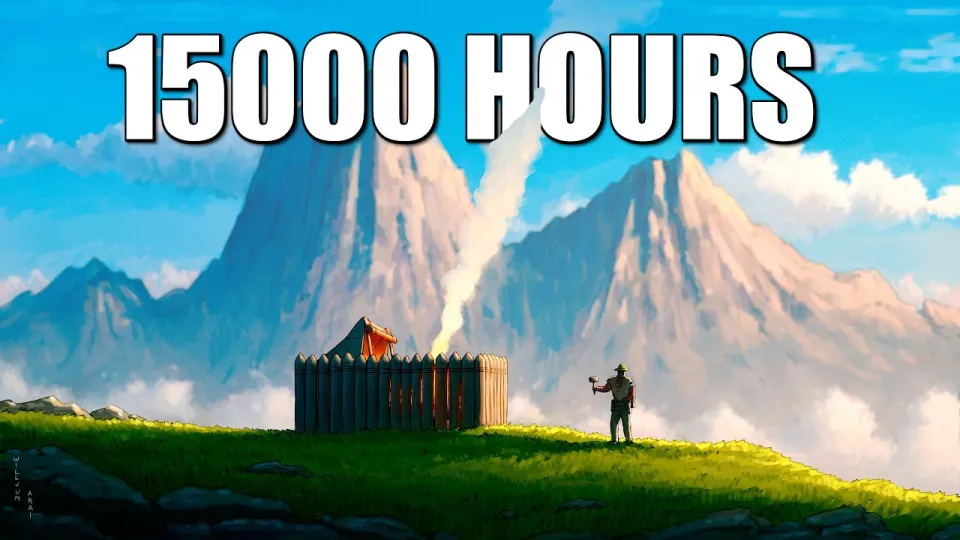
Video: How a solo with 14,782 Hours plays official rust...
You can order the same kind of articles for your own video to boost it on YouTube and Google. Just message the Telegram bot @sat_sit_bot. The bot writes and publishes the articles itself (with your YouTube video embedded) on popular topical websites (no ads). Free trial — 50 articles.
· based on the channel Willjum
Key takeaways
- Willjum's account shows 14,782 hours in Rust, roughly 1,180 hours per year if played since the 2013 early access launch.
- The run is on an official vanilla server as a solo player, with no team backup and no modded loot multipliers.
- Base building in the video comes from a design by the builder Luca.Builds, credited in the video description.
- The video was published on 2026-06-07 and runs as a long-form solo survival story rather than a highlight reel.
- 14,782 hours equals about 616 full days of playtime, or roughly 1,850 hours per year since the 2018 full release.
Rust solo survival at 14,782 hours means one player on an official vanilla server, with no team, no modded multipliers and no safety net, applying years of routine to a fresh wipe. The number itself is the headline: it is roughly 616 full days of playtime, and it shapes every decision in the run, from where the base goes to whether a fight is worth taking. The video breakdown below covers what that experience actually looks like in practice; the run was sponsored by MANSCAPED, and the Beard Hedger Plus offer page carries the discount code used in the video.
What 14,782 hours in Rust actually represents
Fourteen thousand seven hundred eighty-two hours is not a casual figure, and the arithmetic behind it explains why the playstyle looks so calm. Spread across the 12.5 years since Rust first appeared in early access in 2013, it works out to about 1,180 hours per year, which is more than a typical part-time job. Counted only from the 2018 full release, the pace rises to roughly 1,850 hours per year, close to a full-time schedule at 2,000 hours. That volume is why a solo can survive on official servers where newer players are wiped out on day one: the routine is automatic, and the game becomes a matter of reading situations rather than learning them.
How a solo survives on an official vanilla server
Official Rust servers are the least forgiving environment in the game, and a solo there survives through sequencing rather than raw aim. The pattern that high-hour players follow looks like this:
- Secure a starter base in a low-traffic area, away from monuments but close enough to reach a green card monument quickly.
- Push scrap income early, because workbenches, blueprints and research are what convert time into power.
- Keep the base footprint small and the loot split, so a single raid never ends the wipe.
- Take fights only on your own terms, with an escape route and a reason.
- Rebuild immediately after a loss instead of chasing revenge.
A candle hat is a small example of the same logic: a cheap light source that lets you work at night without drawing attention the way a torch or a fire does. The discipline is in not spending scrap on things you can craft or find, and in accepting that some wipes are about surviving rather than dominating.
Base building and the builder behind the design
The base in the run is not improvised on camera; it follows a design by the builder Luca.Builds, credited in the video description. For a solo, base design is a defensive tool as much as a home: a compact footprint with an airlock, a split loot room and a shooting position costs fewer resources to upgrade and gives raiders less value per explosive. Small details matter more than size. A mannequin placed in a window, for instance, draws fire and reveals where attackers are looking, which is a cheap way to gather information during a raid. High-hour solos tend to reuse a handful of proven layouts rather than inventing new ones each wipe, because predictability in building saves hours that can go into scrap and gear.
PvP decisions and the myth of the peaceful farmer
Calling a run peaceful does not mean avoiding fights; it means choosing them. A 14,782-hour player will happily jump a pair of players when the angle, the gear and the timing favor it, and that is exactly the kind of decision that separates an experienced solo from a new one. The practical rules are simple: fight when you have a positional advantage, disengage when you are outnumbered without cover, and never trade a full kit for a grudge. Nail guns, crossbows and primitive weapons are common in the early and mid wipe precisely because they are cheap to replace, and a solo who loses a nail gun loses minutes, not hours. The reputation for farming and building quietly is a strategy, not a limitation.
Typical questions from players watching solo runs
Viewers of long-form solo content tend to raise the same practical doubts. The first is whether the hours are real: an account can accumulate time while logged in and idle, so raw playtime is not a perfect skill measure, though the decision-making on screen is. The second is whether official vanilla is playable for someone with a few hundred hours; it is, but the first days of a wipe are the hardest, and low-population official servers are a gentler entry point. The third is music and pacing: long videos are often watched for atmosphere as much as tactics, and many viewers never install the game themselves. The fourth is the recurring question of how a player who hears a footstep across a field can miss a bear directly behind them, which is less about skill and more about attention being a finite resource.
Links from the video
- MANSCAPED Beard Hedger Plus offer with code WILLJUM15
- Willjum on Patreon
- Willjum on Twitch
- Willjum on Twitter
- Creative Commons Attribution 4.0 license
Conclusion
Rust rewards time in a way few games do, and a 14,782-hour solo run on official servers is the clearest demonstration of that: small bases, disciplined scrap spending, fights taken only when the odds are right. The video breakdown by Willjum shows the routine behind the number rather than a montage of lucky moments, which makes it useful for players at any level. If you want to support the channel and pick up gear at the same time, the MANSCAPED offer page applies the discount code from the video. Watch the full run for the pacing and the base design, then borrow the parts that fit your own wipe.
Source: How a solo with 14,782 Hours plays official rust... · Markdown version
Questions & answers
Is official Rust actually playable as a solo?
Yes, but the first day of a wipe is the most dangerous period, when groups race for monuments and gear. Solos do better on lower-population official servers, in bases away from hot monuments, and by treating the early wipe as a scrap race rather than a fight. Experience shortens the setup phase dramatically, which is why high-hour players make it look easy.
Do 14,782 hours mean the player is necessarily better than everyone else?
Not automatically. Hours can accumulate while a client is logged in and idle, so playtime is an imperfect measure of skill. What the number does reflect is repetition: map knowledge, base layouts, loot routes and fight selection become automatic, and that is what shows in a solo official run.
Why do solo players use cheap weapons like nail guns and crossbows?
Because replacement cost is the real constraint for a solo. A nail gun or crossbow costs little scrap and can be recrafted in minutes, while a lost automatic weapon sets a player back significantly. Trading cheap gear for expensive gear is a win; trading a full kit for a grudge is not.
Can someone who never plays Rust still enjoy these long videos?
Many viewers do exactly that. Long solo runs work as background viewing with a clear narrative: build, farm, fight, lose, rebuild. The music selection and calm pacing are a large part of the appeal, and the tactics are easy to follow even without hands-on experience of the game.