How to climb from Bronze to Unreal in Fortnite Reload without losing your mind
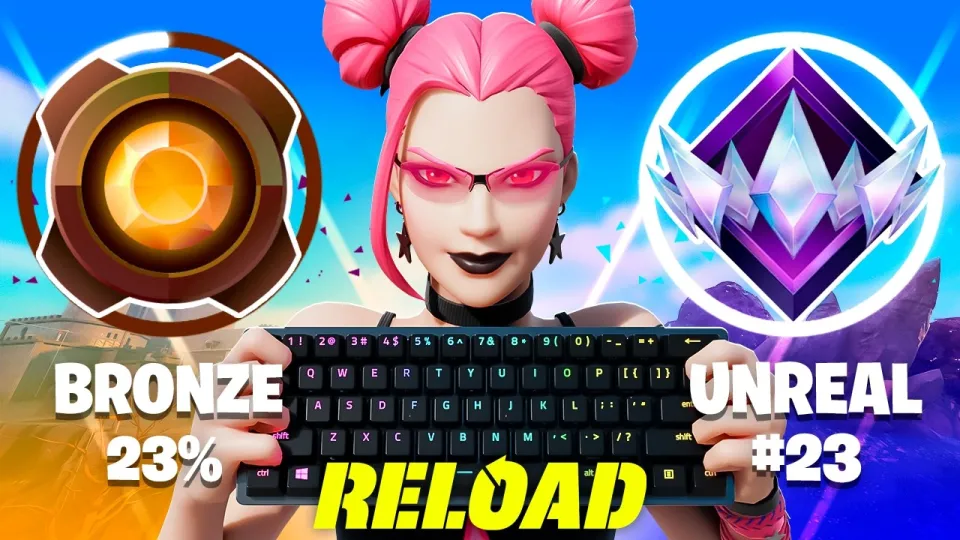
Video: BRONZE To UNREAL Ranked Speedrun In Fortnite Reload!
You can order the same kind of articles for your own video to boost it on YouTube and Google. Just message the Telegram bot @sat_sit_bot. The bot writes and publishes the articles itself (with your YouTube video embedded) on popular topical websites (no ads). Free trial — 50 articles.
· based on the channel HaloBT
Key takeaways
- Fortnite Reload is a faster, respawn-based mode: shorter matches mean more rank points per hour than standard Battle Royale.
- The climb runs through eight tiers — Bronze, Silver, Gold, Platinum, Diamond, Elite, Champion and Unreal — with Gold and Diamond as the two biggest walls.
- HaloBT's Bronze to Unreal run is a solo speedrun in Fortnite Reload, published on 11 October 2026 on the HaloBT channel.
- Controller players can compete at the top of Reload, but only with edit and aim settings tuned before the grind starts.
- HaloBT's practice map Elite Aim Edit Piece uses code 6317-4546-8691 and is built for competitive warm-ups.
Fortnite Reload is the fastest route from Bronze to Unreal because its respawn system packs more fights, more eliminations and more rank points into every match than a standard Battle Royale game. The formula is simple: pick a landing spot you can win, take every fight you can survive, and treat each respawn as a second chance rather than a reset. HaloBT's Bronze to Unreal speedrun in Fortnite Reload shows the same pattern — consistent drops, aggressive but controlled mid-games, and no wasted queues. If you want the practice tools behind that kind of run, the creator's map hub at MoreHaloBT on fortnite.com is where his competitive training maps live.
What Fortnite Reload actually rewards
Fortnite Reload is a squad-based mode with respawns, so rank points come from sustained pressure instead of one lucky endgame. Placement still matters, but eliminations and assists carry more weight per minute than in Battle Royale, which is why the mode is the preferred ladder for players chasing Unreal quickly. The practical consequence: a player who lands safely and hides until top five will climb slower than a player who fights early, dies, respawns and fights again.
Two rules follow from that. First, your drop should give you a weapon within five seconds and an opponent within fifteen. Second, you should never be the last person alive on your team holding a grey pistol — Reload punishes passive players because the respawn timer keeps feeding enemies back into the fight.
The rank ladder, tier by tier
Each tier in Fortnite is divided into three divisions, and the climb from Bronze to Unreal crosses eight tiers. The early ones are forgiving: Bronze, Silver and Gold award points generously for eliminations, so a player with decent aim can move through them in a handful of sessions. The walls appear later.
- Bronze to Silver — pure volume. Play aggressively, learn the map's respawn points, and stop worrying about placement.
- Silver to Gold — start tracking your deaths. If you die before your first elimination in more than a third of games, your drop is the problem, not your aim.
- Gold — the first real filter. Players here hit their shots, so positioning and cover discipline start to matter more than raw mechanics.
- Platinum to Diamond — consistency territory. You need top-half placements plus two or three eliminations per game, not highlight-reel plays.
- Elite to Champion — diminishing returns. Points per match shrink, so a single bad session can erase a good one.
- Unreal — the top percentage of the ladder, reached by accumulation rather than a single promotion match.
Why Gold feels harder than it should
Gold is the tier where Fortnite Reload stops being a shooting gallery and starts being a decision game. Players at this level have learned the respawn timers, they know which buildings overlook the drop zones, and they will third-party every fight they hear. The result is that a mechanically strong player can get stuck simply by taking every engagement offered.
The fix is boring but effective: after each elimination, immediately reposition. Reload's respawns mean the enemy you just killed is already running back with a fresh loadout, and standing still to heal is how most Gold runs end. Pair that with a hard rule — never fight in the open without a wall or a piece of cover within one second of movement — and the tier clears itself.
Controller settings and mechanics for a fast climb
Controller play is viable at the top of Fortnite Reload, but only if your settings are locked in before you start grinding. Changing sensitivity mid-climb resets your muscle memory and costs you points. Set your build and edit sensitivity once, then leave it alone for the whole run.
Three mechanics pay for themselves immediately in Reload:
- Fast edits on ramps and walls — the mode's close-quarters fights are won by whoever edits first, not whoever shoots first.
- Reset-and-replace — being able to reset a wall and place a new one buys the half-second needed to reload.
- Shotgun-to-SMG swaps — Reload's respawn economy means you will fight the same opponent twice; a reliable close-range swap wins both fights.
HaloBT built a dedicated training map for exactly this, the Elite Aim Edit Piece, using code 6317-4546-8691. Ten minutes of warm-up in a practice map before queuing is worth more than an extra ranked game.
Duo fills, solo queues and the social side of the grind
Solo queueing in Fortnite Reload is the purest test of individual skill, but duo fills can be faster if you communicate. The catch is variance: a random teammate who pushes alone will drag your placement down, and Reload's respawns make bad teammates more expensive because they keep re-entering fights they cannot win.
If you queue fills, set expectations in the first ten seconds — call your drop, call your rotations, and mute anyone who refuses to group. If you queue solo, treat every teammate as a bonus rather than a plan. The players who climb fastest in Reload are the ones who can win a two-versus-one after their random duo dies on landing.
Common questions from players stuck in the middle tiers
The most frequent complaint from players grinding Reload is that improvement stalls after switching input devices. That is normal: the first weeks on keyboard and mouse or on a new controller produce fast gains, then a plateau while your decision-making catches up with your hands. The way through is deliberate practice — pick one mechanic per session, drill it in a creative map, then apply it in exactly one ranked game before moving on.
A second recurring question is whether Gold really is harder than Diamond. In practice, Gold punishes impatience because opponents are unpredictable, while Diamond punishes sloppiness because opponents are consistent. Players who fix their drop and their post-fight repositioning usually find Diamond easier than Gold.
The third is about practice maps. Community-built training maps are the cheapest improvement tool available; they cost nothing and target specific weaknesses. The creator's map library is the place to start, and it is updated alongside the ranked seasons.
Useful links
- HaloBT's Fortnite maps and creator profile: https://www.fortnite.com/@MoreHaloBT
- Community Discord: https://discord.com/invite/halobt
- Twitch streams: https://www.twitch.tv/halobt
- Twitter: https://twitter.com/halobombtrooper
- Instagram: https://www.instagram.com/therealhalobt
Final thoughts on the Bronze to Unreal grind
Fortnite Reload rewards players who treat ranked as a volume game with a small number of strict rules, not as a series of highlight attempts. Fix your drop, reposition after every kill, lock your settings and warm up before you queue, and the tiers from Bronze to Diamond will fall faster than expected. The gap between Diamond and Unreal is mostly patience — points per match shrink, so consistency beats aggression in the final stretch. HaloBT's Bronze to Unreal speedrun is a useful reference for what that consistency looks like in practice, and his map hub at MoreHaloBT on fortnite.com is the place to grab the training tools before your next session.
Source: BRONZE To UNREAL Ranked Speedrun In Fortnite Reload! · Markdown version
Questions & answers
How long does it take to go from Bronze to Unreal in Fortnite Reload?
It depends on how many points you earn per match, but Reload's respawn system makes it substantially faster than standard Battle Royale because matches generate more eliminations per hour. A player with solid mechanics and a fixed drop spot can move through Bronze, Silver and Gold in a few sessions, while the Diamond-to-Unreal stretch takes the longest because points per match shrink.
Is it better to queue solo or with fills for a Reload speedrun?
Solo queueing gives you full control over your decisions and is the cleaner test of individual skill. Duo fills can be faster when your random teammate communicates and groups, but a teammate who pushes alone costs you placement points. If you use fills, call your drop and rotations in the first few seconds and mute anyone who refuses to play as a team.
Why do I keep getting stuck in Gold even though my aim is good?
Gold punishes impatience more than poor mechanics. Opponents there know the respawn timers and will third-party every fight, so taking every engagement offered gets you killed. Reposition immediately after each elimination, avoid fighting in the open without cover within a second of movement, and your climb will resume.
Do controller players need special settings to reach Unreal in Reload?
Controller is viable at the top of the ladder, but the settings need to be locked before the grind starts. Choose a build and edit sensitivity once and leave it alone, because changing it mid-run resets your muscle memory. Focus practice on fast edits, reset-and-replace and shotgun-to-SMG swaps, which decide most close-range fights in Reload.